

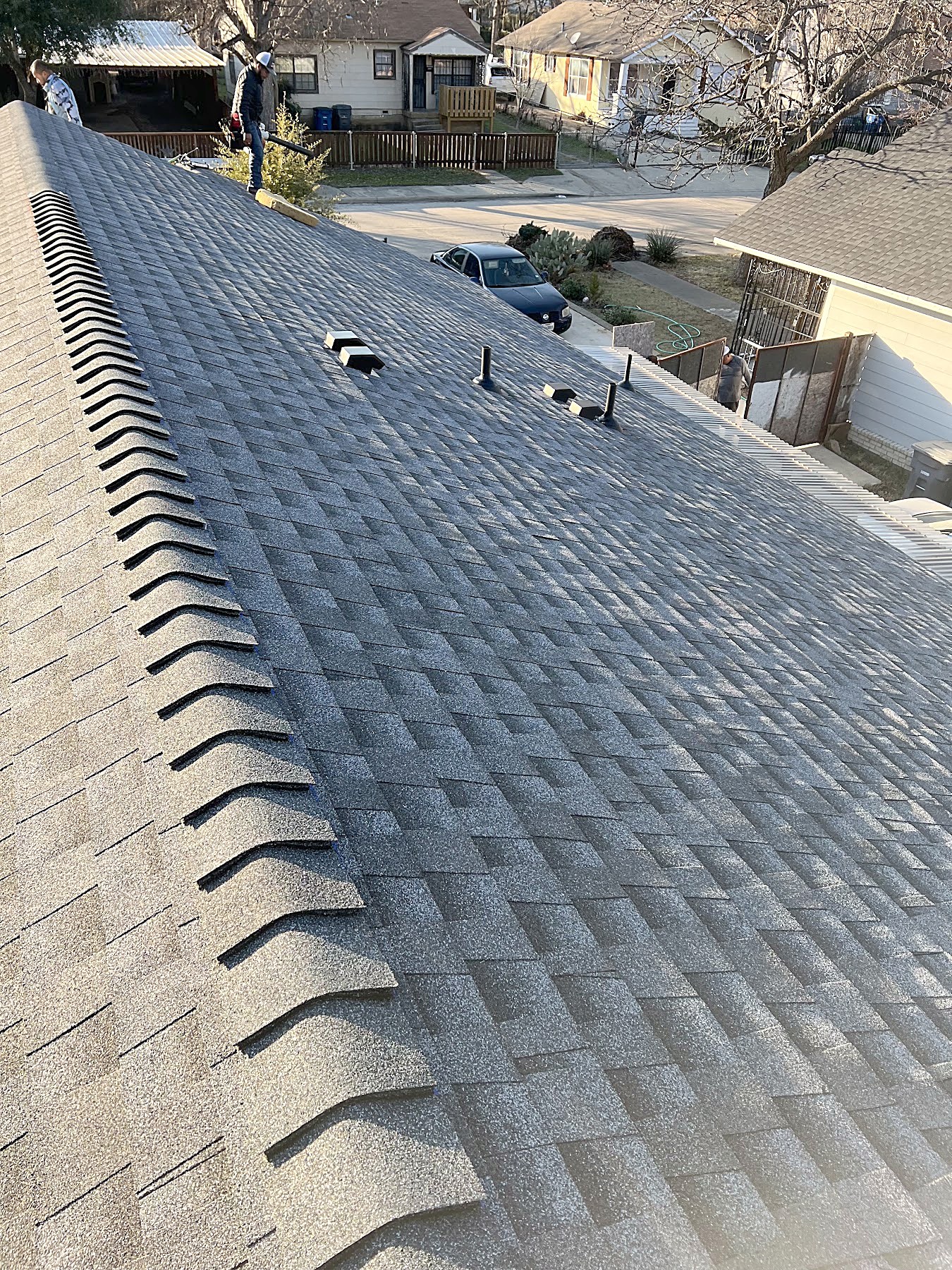
How do I know if my roof has hail damage?
Hail damage is often hard to see from the ground. Hail can knock granules off shingles and bruise the material underneath. After a storm, look for dents in your gutters, downspouts, vents and air conditioning unit, and schedule a roof inspection.
What hail does to shingles
Asphalt shingles are covered in granules that protect them from the sun. Hail can knock these granules loose and bruise the shingle, which can shorten the life of the roof even when there is no leak right away.
Because this damage is hard to see from the street, a roof can look fine from the ground and still be damaged.
How insurance adjusters check for hail damage
Adjusters often mark a test square on each side of the roof and count the hail hits inside it. Damage can vary from one side of the roof to another.
Dents in gutters, downspouts and vents are also used as evidence of hail. Taking photos of this damage after a storm can be helpful.
Wind damage looks different
Wind damage often shows up as missing shingles, lifted edges or creased shingles, usually on the side of the roof that faced the wind.
Wind damage is often repairable, while hail damage across the whole roof more often leads to a replacement.
Related questions
How big does hail have to be to damage a roof?
It depends on the age and type of the shingles and the wind during the storm. Hail around one inch in size can damage many roofs.
Can impact-resistant shingles be damaged by hail?
Yes. Class 4 impact-resistant shingles hold up better against hail, but they can still be damaged.
How long do I have to file a hail claim?
Deadlines vary by insurance company and policy. Check your policy and have your roof inspected as soon as possible after a storm.